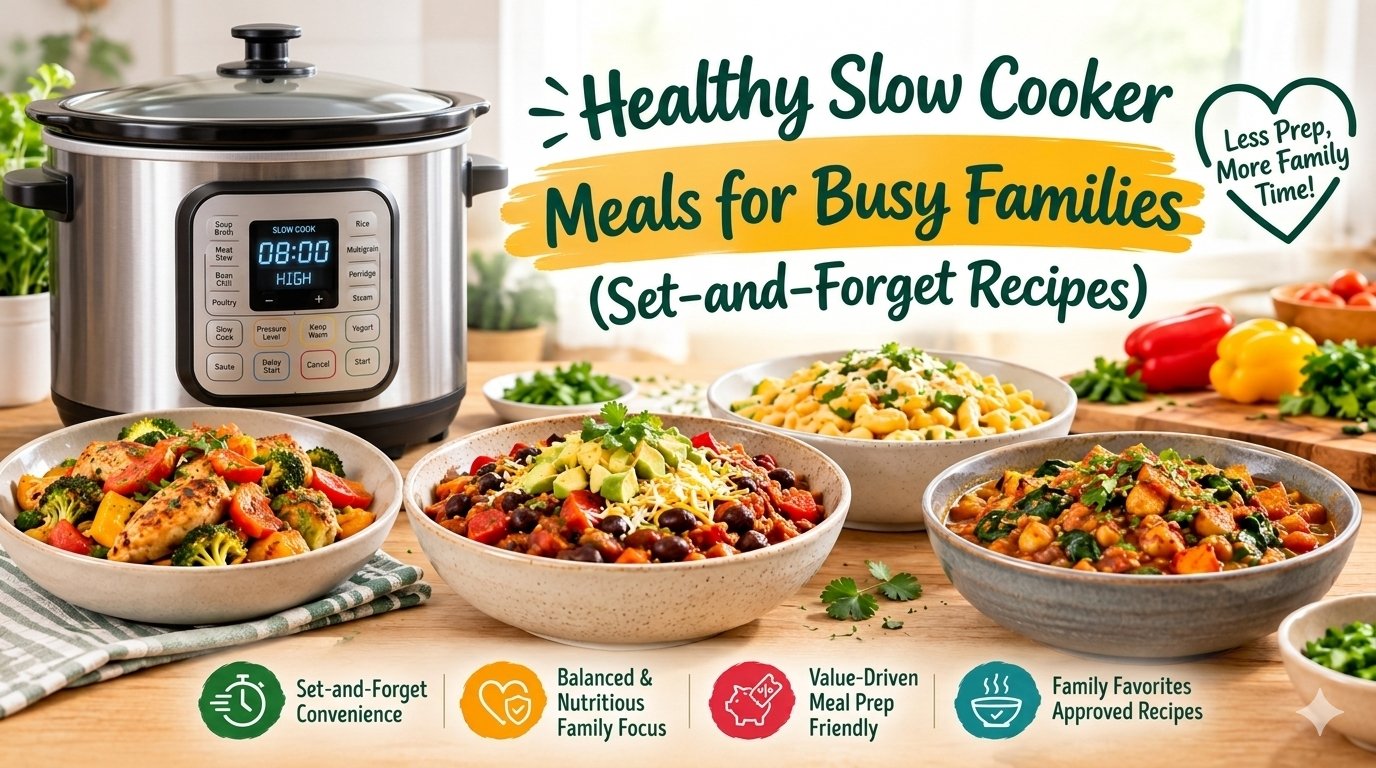
Healthy Slow Cooker Meals for Busy Families (Set-and-Forget Recipes)
You come home after a long commute, the kids are starving, and you’re staring at the fridge wondering how “healthy slow cooker recipes” ever sounded like the answer. The problem isn’t the slow cooker. It’s that no one showed you how to make it work for real Indian schedules and ingredients.
This guide fixes that. We’ll walk through set-and-forget meals that suit Indian tastes, how to fit prep into a busy weekday, what actually stays healthy in a slow cooker, and how to use leftovers smartly so dinner stops being a daily stress.
Why Slow Cooker Meals Make Sense For Indian Families
In many Indian homes, evenings are a rush: tuition classes, late office calls, traffic, and still everyone expects garam khaana on the table. A slow cooker quietly bubbling away in the background can remove that pressure, especially if most of the work is done in the morning.
Unlike pressure cooking, slow cooking is hands-off. You’re not standing there for whistles or worrying about burning the tadka. Once you trust the timings for your usual dals, curries and stews, you can literally set it up and go to office or tackle work-from-home calls.
Slow cookers also work well with the batch cooking and freezer-style approach that the recipes on batch cooking for beginners already use, so you can cook once and feed the family twice without repeating the exact same meal.
What Counts As Healthy In Slow Cooker Cooking?
Healthy doesn’t just mean “less oil”. For easy slow cooker meals that actually support your health, think in terms of balance: plenty of vegetables, good-quality protein, and complex carbs, with moderate fat and salt.
The slow cooker is ideal for pulses and whole grains because the long cooking time breaks them down without needing lots of ghee or cream. Think rajma, chole, mixed dal, or even whole-wheat daliya cooked with vegetables for a comforting dinner that still feels light.
If you or someone at home is watching sugar, blood pressure or joint pain, you can also pair your slow cooker dinners with ideas from anti inflammatory meal prep to keep things easier on the body over the week.
7 Healthy Slow Cooker Recipes Indians Actually Want To Eat
Most lists skip Indian flavours and jump straight to Western casseroles. That’s why slow cookers end up forgotten in the back of the cupboard. Here are family-style dishes that work with local tastes and ingredients from your kirana or sabziwala.
1. Slow Cooker Rajma Masala
Soak rajma overnight, then throw it into the slow cooker in the morning with onion-tomato masala, ginger-garlic, basic spices and water. Cook on low for 7–8 hours or on high for about 4 hours, then mash a few beans to thicken before serving.
This is one of those healthy crockpot recipes that tastes even better the next day. Pack leftovers for lunch with brown rice or phulka, or freeze a portion for a future midweek dinner when work runs late.
2. Vegetable Sambar With Extra Dal And Veggies
Add toor dal, lots of vegetables (bottle gourd, carrots, drumsticks, pumpkin), tamarind water and homemade or store sambar powder to the slow cooker. Leave it on low while you’re at work and finish with a quick tadka.
Serve with steamed rice or idlis, then reheat leftovers as a thick soup the next day. This is where slow cooker meal prep really pays off: one cooking session gives you two totally different meals.
3. Chicken Curry With Coconut And Spinach
Use bone-in chicken, ground coconut or light coconut milk, onions, tomatoes, spinach and spices. The long cooking helps the chicken become tender without needing loads of oil. Add the spinach towards the end to keep the colour vibrant.
If someone at home prefers lighter dinners, serve their portion with a small bowl of millet or a mixed salad and keep the rest for naan or rice for everyone else.
Practical Tips To Keep Slow Cooker Meals Healthy
Healthy slow cooker recipes can become heavy very quickly if ghee, cream and cashews are used the same way as in restaurant-style dishes. The beauty of slow cooking is that you can cut that down and still get flavour.
Start with less oil than you’d use on the gas. For most family dishes, 1–2 tablespoons is enough, especially if you pre-sauté the masala on the stove and then transfer it to the cooker. This small step gives you depth without drowning the dish in fat.
Slow cookers are perfect partners for the kind of high-protein focus you see in high protein meal prep. Add extra lentils, beans or lean meat to your recipes instead of only adding potatoes or cream to make them “filling”.
How To Fit Slow Cooker Prep Into An Indian Weekday
Mornings in Indian homes are chaos: breakfast, tiffins, school runs, maybe some office emails already. You won’t stand and chop ten vegetables at that time. The trick is shifting most of the work to the night before.
Here’s a simple routine that works for many families:
- After dinner, soak beans or dal for the next day’s recipe.
- Chop onions, tomatoes and key vegetables; refrigerate in a box.
- Pre-mix your spices for the dish in a small dabba so you’re not opening ten jars.
- In the morning, quickly sauté the masala, dump everything into the slow cooker, switch it on and leave.
If you’re interested in doing this for more than one meal at a time, the approach in Batch Cooking 101 shows how to cook once and reuse components across several dinners.
Easy Slow Cooker Meals For School Nights
On days with late tuition or sports practice, plan the most forgiving dishes: mixed dal with vegetables, chicken stew with carrots and beans, or a vegetable khichdi with moong dal and rice. These dishes can sit on “warm” for a while without overcooking badly.
Serve with quick sides like cucumber raita, sliced fruit or some roasted papad. You get a full thali feel without another hour in the kitchen.
Smart Storage, Leftovers And Food Safety
In India’s climate, food safety matters even more when you leave food out or reheat it often. Once your slow cooker meal is done, don’t let it sit at room temperature for hours. Cool it slightly, then portion into shallow containers and refrigerate.
Most bean-based dishes and curries stay fine in the fridge for a couple of days. If you’re cooking double for intentional leftovers, move half straight to the fridge to avoid repeated reheating. Always reheat only what you’ll eat that meal.
For more detail on how long different dishes stay fresh, the guide on how long meal prep lasts breaks it down by ingredient so you’re not guessing.
Using Leftovers Without Boredom
Leftover rajma can become stuffed paratha filling, mixed dal can turn into cheela batter, and extra chicken curry can be shredded and rolled into whole wheat wraps with some salad. Kids notice when the same dish appears three nights in a row; they don’t notice when it’s stretched creatively.
This is where slow cooker meal prep really shines: you invest effort once, then flip the base into two or three different meals with small tweaks so no one complains.
When Slow Cookers Don’t Work (And What To Do Instead)
Some Indian dishes simply don’t suit slow cooking: crisp pakoras, quick stir-fries, or anything that needs high heat for texture. For those, you’re better off with the gas stove or an air fryer.
If you love the low-effort style of these recipes but want something that finishes faster, you can rotate slow cooker days with sheet pan and one-pot dinners like the recipes already shared for healthy sheet pan dinners or one-pot healthy meals. The goal is the same: less active cooking time and fewer utensils to wash.
Conclusion
Slow cookers can quietly solve that “what’s for dinner?” stress by giving you reliable, healthy slow cooker recipes that suit real Indian family life. Once you get into the habit of prepping the night before, you’ll find you’re less tempted by last-minute takeaway and more relaxed at dinnertime.
Resources on Polaslott already support this way of eating with smart meal prep ideas, so use them to build your own small routine and adjust as your week changes. Start with one or two slow cooker nights, see what your family enjoys, and then build from there.
Frequently Asked Questions
Q1. Are slow cookers good for Indian recipes?
Ans: Yes, many Indian dishes adapt very well to slow cookers, especially dals, rajma, chole, chicken curries and stews. Anything that normally simmers for a long time on the gas is a good candidate, while crisp snacks or quick stir-fries are better cooked on high heat.
Q2. How can I make healthy slow cooker recipes with Indian flavours?
Ans: Focus on plenty of vegetables, pulses and lean meats, and go lighter on cream and ghee. Build a strong onion-tomato base, toast your masalas briefly in a pan, and then transfer everything to the slow cooker so you still get the same depth of flavour.
Q3. What are some easy slow cooker meals for working parents in India?
Ans: Good options are rajma, chole, mixed vegetable dal, chicken stew with vegetables, or a simple vegetable sambar. You can start them before leaving for work and keep them on warm until dinner, then just make quick rice, rotis or salad when you get home.
Q4. Can I use slow cooker meal prep for kids’ school tiffin?
Ans: Yes, cook a mild base like dal, rajma, chicken curry or vegetable khichdi and then turn leftovers into parathas, wraps or mixed rice for tiffins. This is similar to the approach used in healthy school lunch ideas, where one main prep gets reused in different ways.
Q5. How do I store slow cooker leftovers safely in Indian weather?
Ans: Once cooking is done, don’t let the food sit out for long in a warm kitchen. Portion it into smaller containers, cool briefly, then refrigerate and reheat only what you need for each meal. If you’ve made a big batch, freeze some portions for a future busy night.
Q6. Are slow cookers and healthy crockpot recipes expensive to follow?
Ans: The cooker is a one-time purchase, but the actual recipes can be very budget friendly because they rely heavily on beans, lentils and seasonal vegetables. Planning a basic weekly menu and repeating ingredients keeps your grocery list short and makes the most of what you buy.
Leave a Reply